
Two Specialties, One Incision
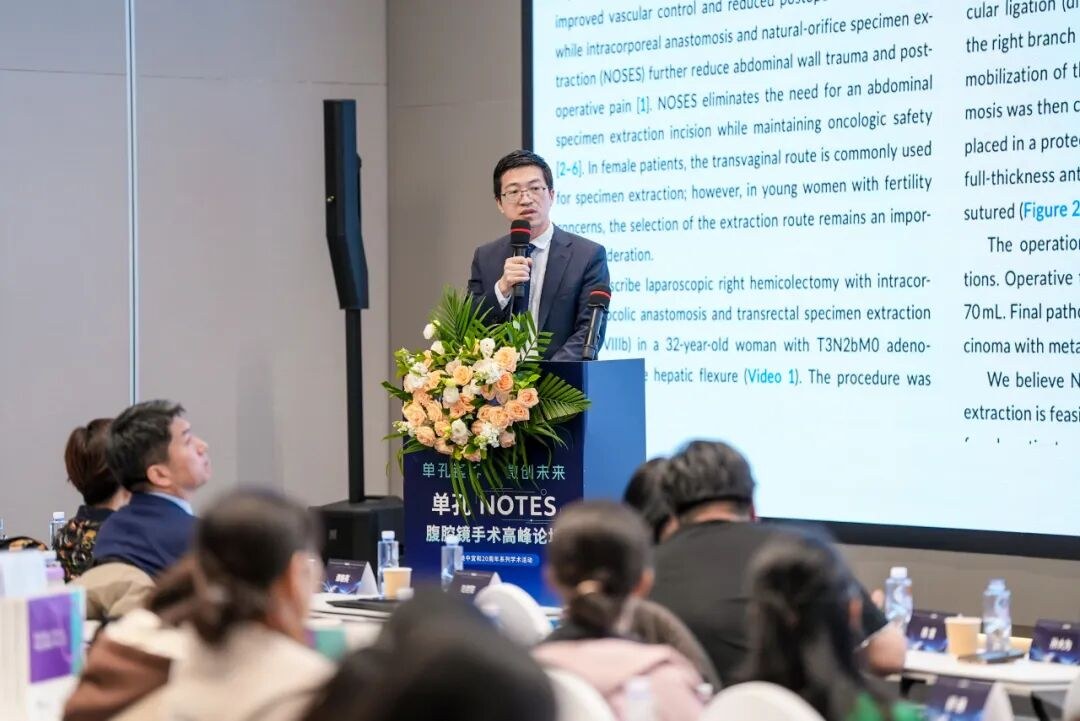
On 31 October 2026, AMCARE Medical Group convened the 2026 Single-Port NOTES Laparoscopic Surgery Summit at Beijing Amcare Hospital. The subject was natural-orifice transluminal endoscopic surgery and single-port laparoscopy — techniques that reach the operative field through one access point, often a natural orifice, rather than several abdominal wall incisions. The stated aim was not simply to display new equipment but to move the technique toward standardised clinical use.
The forum brought together gynaecologists and general surgeons from Peking Union Medical College Hospital and Beijing Jishuitan Hospital alongside clinicians from AMCARE's Beijing Amcare Hospital, Amcare Airei Cancer Hospital, Wanliu campus and North Third Ring campus. It formed part of the group's twentieth-anniversary academic series. Putting the two specialties in one room was deliberate: the same access problem, the same instrument collision and the same learning curve look different in a pelvic operation and in a colorectal one.
A Center, Not Just a Conference
In her opening remarks, Chen Xiao, co-founder and chief financial officer of AMCARE, described clinicians as the group's core asset and advanced equipment and technique as the vehicle through which that asset works. She framed the twentieth anniversary as a starting point rather than a milestone, and set out the group's intention to let academic work drive clinical practice and clinical practice feed back into academic work.
She then unveiled the AMCARE Single-Port NOTES Laparoscopic Surgery Center together with Professor Sun Dawei of the Department of Obstetrics and Gynaecology at Peking Union Medical College Hospital, the forum's academic chair. The center's opening marks a shift from individual surgeons using the technique to a structured programme for training, case selection and quality control — which is the part that determines whether a technique is safe outside the hands of its enthusiasts.
Why "No Visible Scar" Is Not the Whole Argument
For patients, the appeal is immediate: a smaller wound, less pain, faster recovery, and no obvious scar on the abdominal wall. Natural-orifice specimen extraction goes further, removing tissue through the vagina or rectum and avoiding the larger extraction incision that otherwise partly undoes the benefit of a minimally invasive operation. These are real advantages, and for younger gynaecological patients in particular they matter.
But the most visible benefit is not the most important one. In his opening address, Professor Sun set out two purposes for the meeting: to spread current thinking in minimally invasive surgery and to clarify where the field should go next, so that standards rise across the profession rather than at a few centres. He described modern surgery as moving toward less invasive and non-invasive approaches combined with intelligent instruments, with patient comfort as the endpoint. The clinical test of any such technique is whether it preserves the oncological and functional result of the conventional operation while reducing the trauma of access.
Five Lectures, One Repeated Warning
Complex benign gynaecological disease
Professor Wang Yongjun, director of obstetrics and gynaecology at Beijing Jishuitan Hospital, reviewed strategies for difficult single-port cases in benign disease. He noted that single-port laparoscopy has developed rapidly in China over the past decade and now stands at an internationally competitive level, then spent most of his talk on restraint: strict indication selection, bleeding control planned in advance, and willingness to add a small auxiliary port when efficiency or safety demands it. Safety, he said, comes before the elegance of the incision.
Natural-orifice specimen extraction in gastrointestinal oncology
Professor Liu Zheng, director of the gastrointestinal cancer center at Amcare Airei Cancer Hospital, discussed NOSES in gastrointestinal tumours. Removing the specimen through a natural orifice avoids the pain and scarring of a large abdominal extraction incision and can speed early recovery. He cited multiple meta-analyses reporting no statistically significant difference in long-term overall survival compared with conventional laparoscopic surgery, with more pronounced short-term advantages. International guidance developed by multinational expert groups has been published, and standardised training programmes are being rolled out nationally.
VNOTES in gynaecology
Professor Liu Haiyuan of Peking Union Medical College Hospital addressed the transvaginal route. His practical point was about training: a surgeon already competent in both vaginal hysterectomy and conventional laparoscopy can acquire natural-orifice surgery relatively quickly. He recommended starting with straightforward procedures such as salpingectomy or adnexal surgery and progressing gradually, rather than beginning with the cases that make the technique look most impressive.
Single-port robotics in colorectal surgery
Professor Lu Junyang of the department of general surgery at Peking Union Medical College Hospital traced the progression from open surgery to multi-port laparoscopy and then to multi-port robotics. The persistent limitations of single-port laparoscopy are instrument clashing and a cramped working space; flexible serpentine arms address both, and he argued they are particularly useful in low rectal cancer surgery, where the operating field is narrow and recovery is slower.
Single-port robotics in gynaecology
Professor Sun Dawei closed the scientific session with the development of a domestically produced flexible-arm single-port robotic system: research began in 2005, the first clinical case was completed in 2022, and regulatory approval followed in 2023. Its multi-joint continuum arms can bend through more than 500 degrees, addressing the instrument interference and distorted view that constrain rigid single-port instruments. Citing phase II trial data, he reported a 100 percent procedural success rate across the gynaecological single-port robotic cases studied, with no conversion to another approach, and concluded that the technology is already present rather than merely promising.

The figures above were presented by the speakers as published evidence, trial data and their own clinical experience. They are reported here as lecture content, not as AMCARE clinical outcomes, and a conference presentation is not the same thing as a peer-reviewed multicentre result. The consistent thread across all five talks was not that fewer incisions are always better, but that case selection, a prepared conversion plan and structured training are what make a reduced-access operation defensible.
The Room Next Door
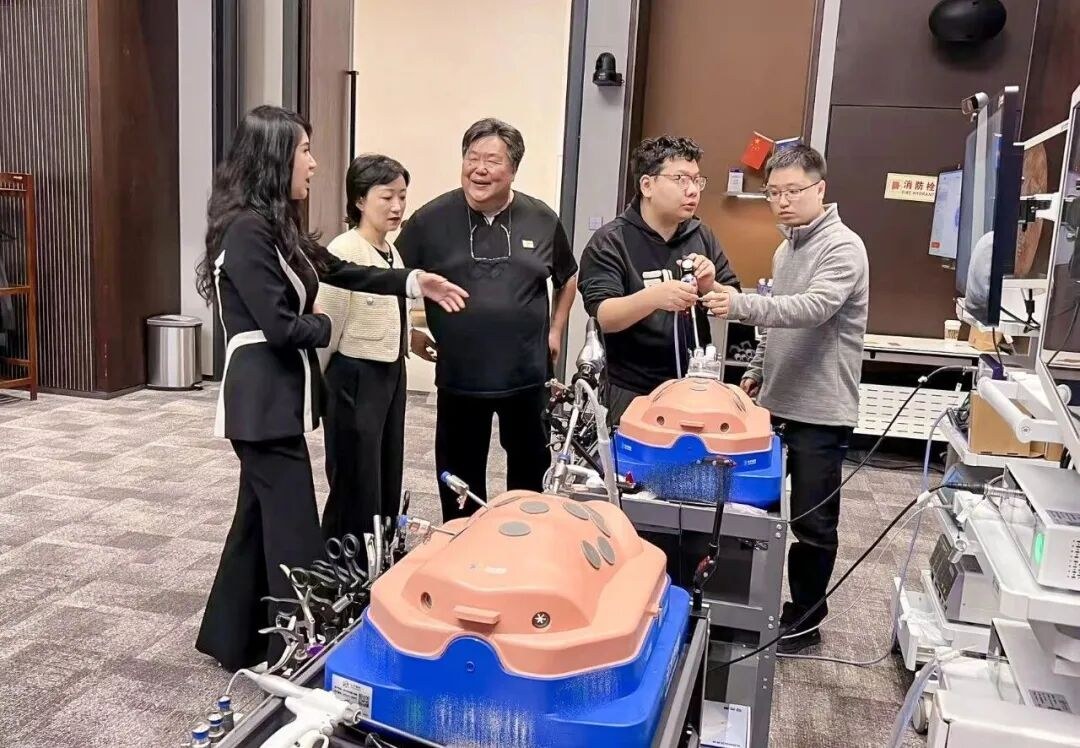
While the lectures ran, a parallel session offered hands-on simulation on single-port laparoscopic and single-port robotic platforms, with training stations for both gynaecological and general surgical procedures. Professor Ren Chang of Peking Union Medical College Hospital provided on-site instruction, answering questions about instrument handling and port placement as visiting clinicians from across the country worked through the exercises.
Participants described the combination of lecture and simulation as unusual and useful: it moves a technique from the podium to the operator's hands, and gives younger surgeons a low-risk setting in which to meet the learning curve before meeting it in a patient. For a hospital building a new center, that training infrastructure is arguably the more consequential half of the announcement.
What a Patient Should Ask
Single-port and natural-orifice surgery is often marketed as an upgrade — a smaller version of the operation you were already going to have. It is better understood as a different operation with different selection criteria. Useful questions before agreeing to it include whether the location and size of the lesion suit this access route, how much experience the operating team has with it, what the plan is if conversion to additional ports or open surgery becomes necessary, and whether the long-term result for this particular diagnosis is equivalent to the standard approach.
For international patients there are practical questions too: how long the hospital stay and recovery window are likely to be, whether pathology and operative reports will be provided in English, how follow-up will be handled after returning home, and whether the assessment, surgery and early recovery can be fitted into one trip. AMCARE's international patient team can confirm these arrangements in advance. The decision about access route, however, belongs with the operating surgeon after reviewing the imaging and the diagnosis — not with a package description.
This article is a report of an academic meeting. The techniques, trial figures and clinical results described were presented by invited speakers and are not AMCARE clinical outcome data. Nothing here is a recommendation for a particular operation or a substitute for individual medical advice; suitability depends on diagnosis, staging, anatomy and prior treatment, and must be assessed in consultation with a qualified surgeon.