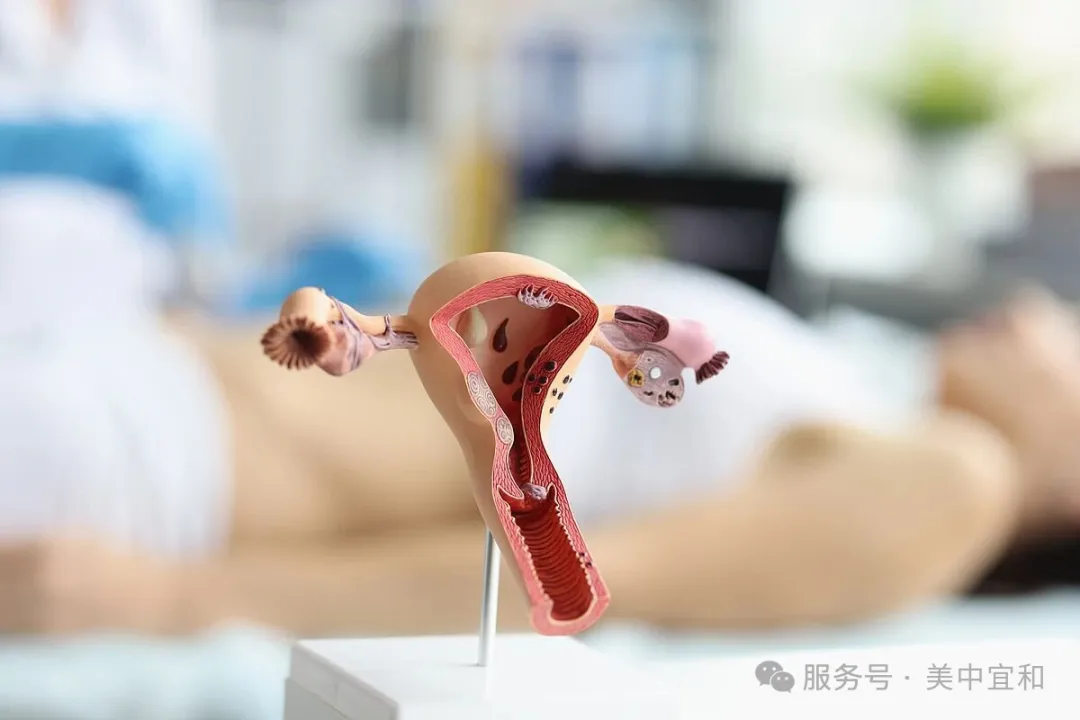
Patient Background: Two Large Fibroids Blocking IVF
Woman over 40, planning IVF, 5 uterine fibroids total
7cm (anterior wall) + 6cm (posterior wall)
3 years, from 5cm to 7cm + 6cm
2cm incision, same-day bed mobility, nearly scarless
A woman over 40, struggling with infertility, placed her final hope in assisted reproduction — only to be blocked by two large uterine fibroids.
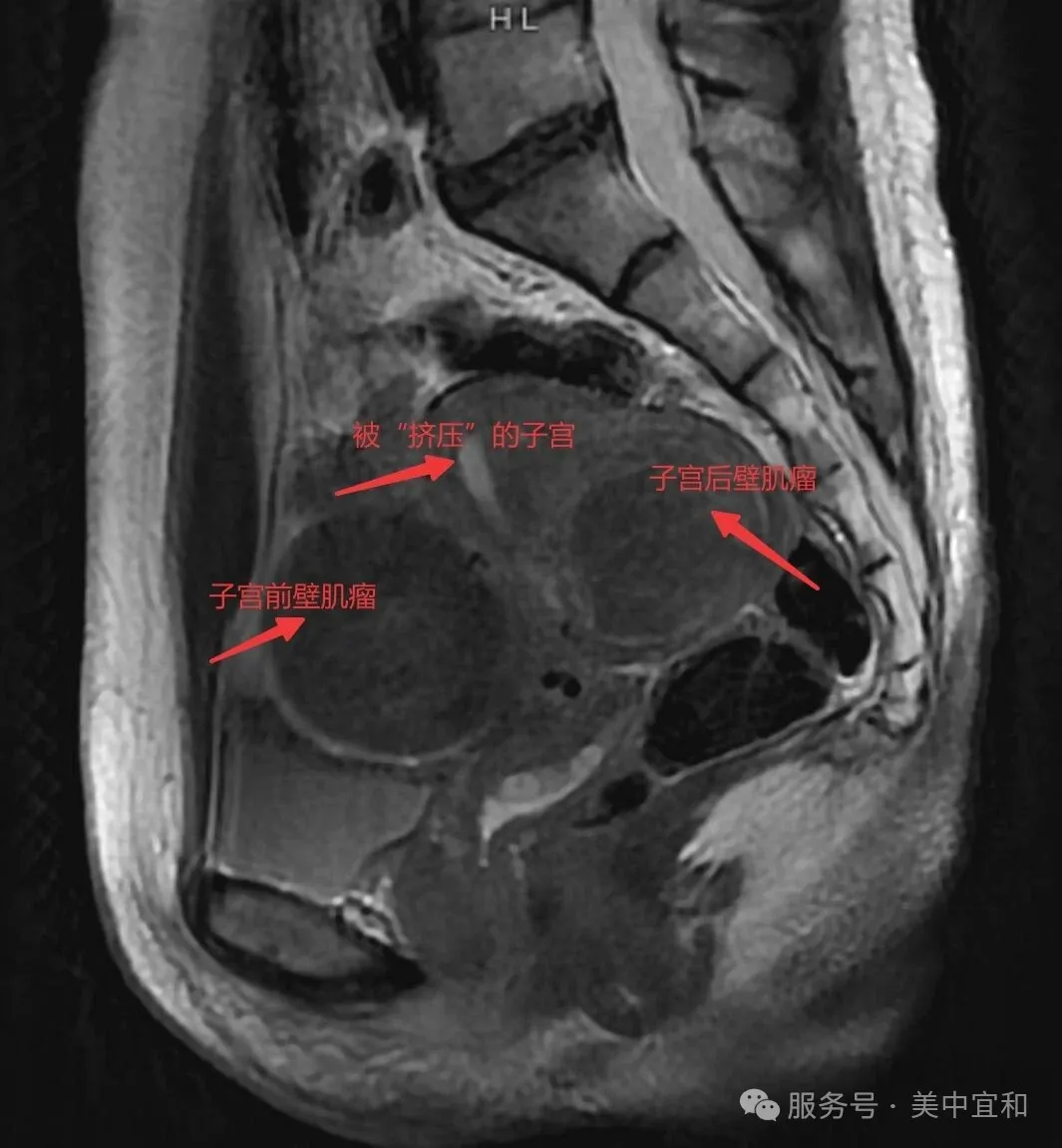
Over the past 3 years, the fibroids had steadily grown from 5cm to 7cm and 6cm, positioned on the anterior and posterior walls of the uterus — a pincer attack from front and back. When first discovered, she had no notable symptoms: no heavy bleeding, no anemia, rarely even dysmenorrhea. But now, as she prepared to start IVF, she could no longer ignore them.
"What if the 'gentle' fibroids 'turn aggressive' once a baby is growing inside the uterus?"
Expert Consultation: Prof. Sun Dawei's Assessment
Ms. N came to see renowned gynecologist Prof. Sun Dawei at AMCARE Beijing. The MRI revealed that besides the two large fibroids on the anterior and posterior walls, there were 3 smaller fibroids measuring 3cm, 2cm, and 1.5cm respectively — 5 fibroids in total.
What Are Uterine Fibroids?
Uterine Fibroids (Leiomyomas) are benign tumors arising from the smooth muscle tissue of the uterus — the most common benign tumors in women. Based on their relationship to the uterine wall:
- Submucosal fibroids — protrude into the uterine cavity; greatest impact on pregnancy
- Intramural fibroids — located within the uterine muscle wall
- Subserosal fibroids — bulge outward from the uterus; less impact on the cavity
How Fibroids Affect Pregnancy
Ms. N's two larger fibroids were subserosal, meaning they bulged outward with minimal impact on uterine cavity shape. However, both were over 5cm in diameter — risks during pregnancy increase significantly:
- Under estrogen and progesterone influence, fibroids may grow rapidly during pregnancy
- First trimester: large fibroids may compress uterine blood vessels, reducing endometrial blood supply and risking embryo hypoxia
- May trigger abnormal contractions, increasing miscarriage risk
- Second/third trimester: fibroid degeneration causing acute abdominal pain
- Increased risk of preterm labor, difficult labor, and postpartum hemorrhage
Given these risks, Ms. N decided immediately to have the fibroids surgically removed before proceeding with IVF.
Why Single-Port Laparoscopy?
For women over 40 trying to conceive, the surgical goal is not only complete fibroid removal but also maximizing protection of the uterine muscle layer to provide a safe foundation for future pregnancy.
| Surgical Approach | Characteristics |
|---|---|
| Traditional Laparotomy | Large incision, slow recovery, visible scarring |
| Multi-port Laparoscopy | Minimally invasive, but multiple small scars |
| Single-Port Laparoscopy | ~2cm incision / Nearly scarless / Fertility-preserving |
Prof. Sun designed a Transumbilical Single-Port Laparoscopic Myomectomy (LESS-M):
- Only a ~2cm incision through the navel
- The navel is the body's "natural scar" — no subcutaneous fat or muscle tissue to traverse
- Post-operative scarring blends with the navel's natural folds — nearly invisible
- Preserves fertility while achieving excellent cosmetic results
The Surgery: Large Fibroids Through a Tiny Incision
Single-port laparoscopic surgery places high demands on the surgeon: instruments enter almost parallel through a single channel, without the "triangular operating space" of traditional laparoscopy — like "dancing with shackles" in a confined space.
Surgical Preparation: Under the gynecology team's mature ERAS protocol, comprehensive pre-operative preparation was completed including optimized anesthesia, multimodal pain management planning, and thrombosis prevention measures.
Step-by-Step Procedure
- General anesthesia administered; instruments inserted through the single umbilical incision
- Comprehensive exploration of the uterus and pelvic cavity
- Fibroids enucleated completely along their capsules — all 5 fibroids removed
- Uterine wound closed with continuous layered suture using barbed suture
- Anti-adhesion barrier applied to the wound surface
- Large fibroids extracted through the umbilical incision using "apple-peeling" morcellation technique
2 hours 3 minutes
~2cm
5 total
Same day bed mobility
Ms. N's vital signs remained stable throughout, and she returned to the ward in good condition. Under the ERAS protocol:
- Day of surgery: able to turn in bed independently
- Next day: able to get out of bed and walk
- The incision was "perfectly" hidden — almost no visible surgical scar
After a period of recovery, Ms. N can resume her journey toward pregnancy.
Fibroids and Pregnancy: What Should You Do?
Discovering uterine fibroids while planning pregnancy is a common dilemma: Should I have surgery first? How do I choose the surgical approach?
You Can Try Conception If:
- Fibroids are small (typically under 4cm)
- Location does not distort the uterine cavity
- No related symptoms (normal periods, no pain)
→ Monitor size and growth during pregnancy with regular ultrasounds.
Consider Surgery First If:
- Submucosal fibroids — protrude into cavity, affect endometrium
- Large intramural fibroids — distort cavity or compress fallopian tubes
- Cervical fibroids — obstruct sperm passage
- Symptomatic fibroids — heavy bleeding, anemia, pelvic pain
AMCARE Expert Tip: If you are planning pregnancy and have been diagnosed with fibroids, we recommend a professional evaluation before proceeding. Our multidisciplinary team offers remote pre-assessment for international patients to help you develop the optimal treatment plan.
Need a Gynecology or Fertility Consultation?
AMCARE's International Patient Team provides end-to-end care for overseas patients — from remote consultation to surgical scheduling, with full Chinese and English support.