The Gap Between "The Bone Is Fine" and "You Can Run Again"
Exercise is supposed to be the antidote to a sedentary life. But when a sports injury actually happens, many people end up in an awkward position. The injury is not severe enough to justify surgery, and yet it never heals on its own. Rest, a few pain-relief patches, and a vague promise to "take it easy" do not get anyone back to training.
On October 13, 2026, AMCARE's Orthopedics Center opened its High-Intensity Sports Medicine Clinic — a doctor-led service designed specifically for that in-between zone. Its stated purpose is simple: treat the injury, and help people return to the track.
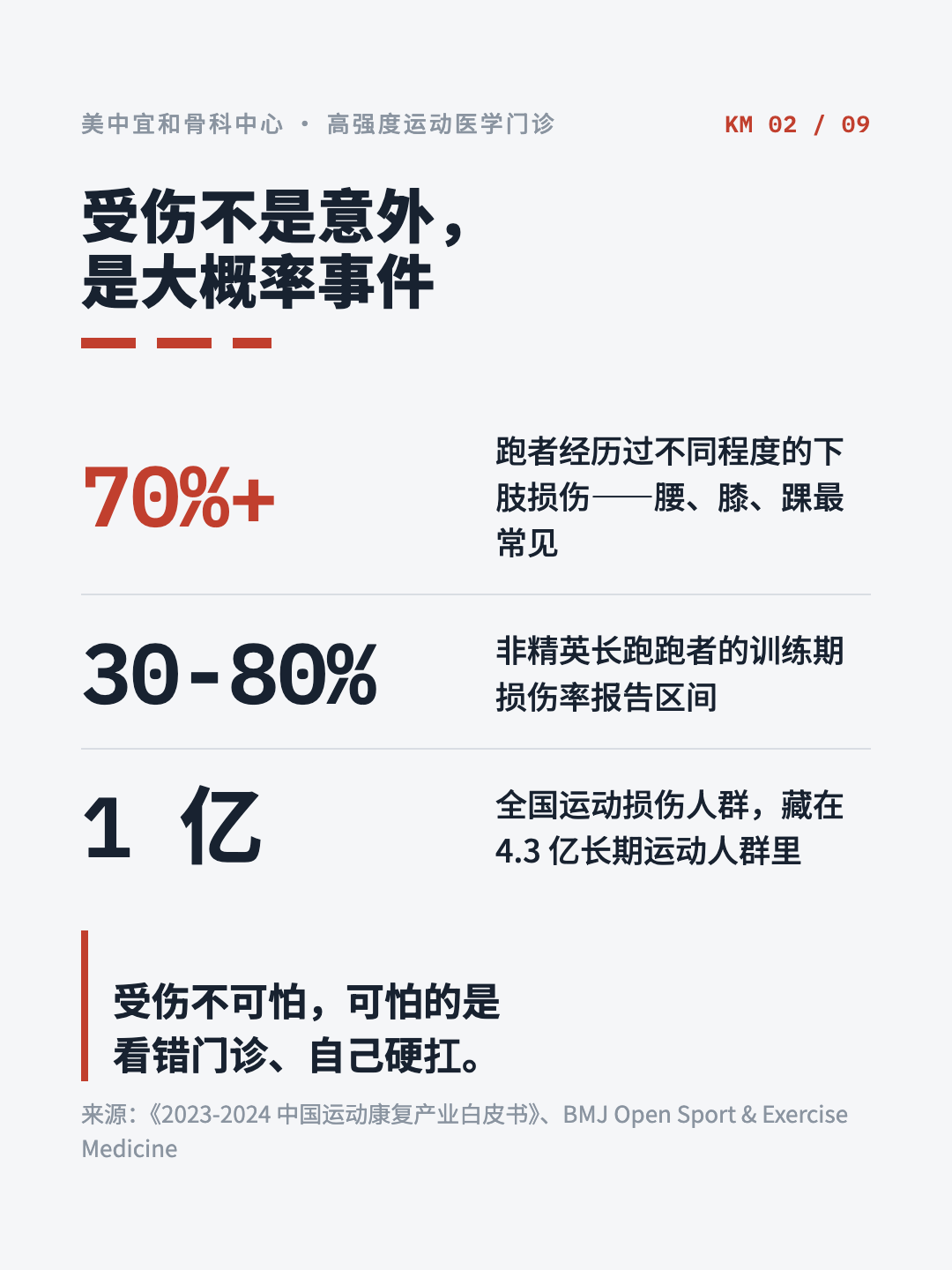
China has an estimated 100 million people living with a sports injury, inside a population of roughly 430 million who exercise regularly. Most of them are not professional athletes. They are runners, swimmers, ball-sport players and weekend skiers who simply want to keep doing the thing they love.
The Four-Step Detour Most Runners Take
In a community survey of 23 runners with knee pain, 16 said their first reaction after injury was to book an orthopedics appointment. Only 3 thought of a sports medicine department — because "knee pain" is widely understood as "a bone problem".
That assumption produces a predictable four-step loop. No single step is unreasonable. Put together, they move a runner further and further from the starting line.
Step 1: Tough it out, or search online
Most people assume "a couple of days' rest will sort it out". They push through the pain or simply stop training for a while. The pain returns, performance drops, and the cycle repeats.
Step 2: Book orthopedics and get an X-ray
The imaging shows no structural problem. The advice is to rest for a few days and resume running once it stops hurting. Nothing is wrong — and nothing is explained.
Step 3: Leave with a few pain-relief patches
Patches, rest and "less exercise" become the whole treatment plan. There is no structured rehabilitation programme, no load management, no timeline for return.
Step 4: Figure out rehab alone
Training starts and stops. The injury drags on. Some runners eventually recover by trial and error; many simply give up the sport they were trying to protect.
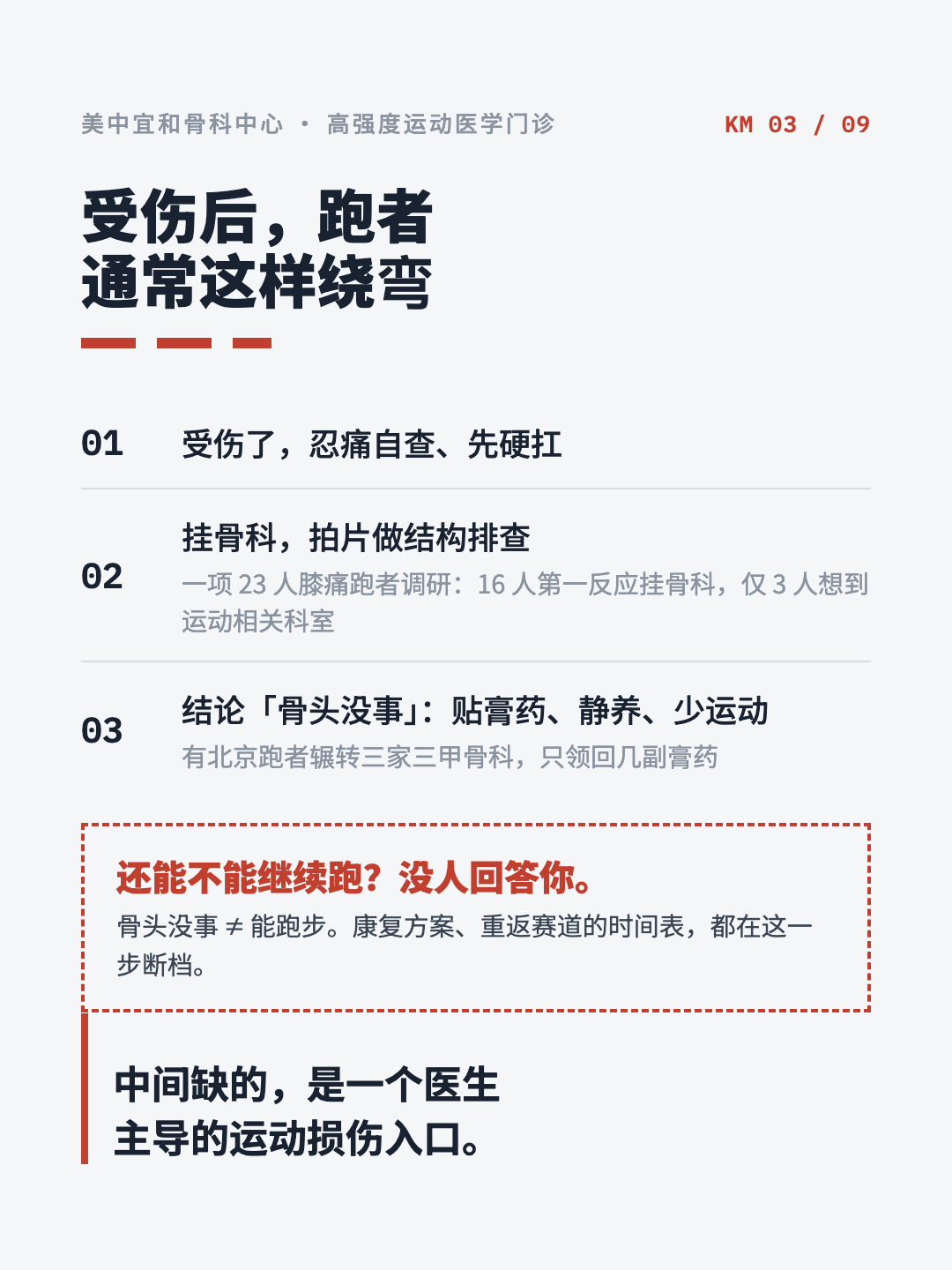
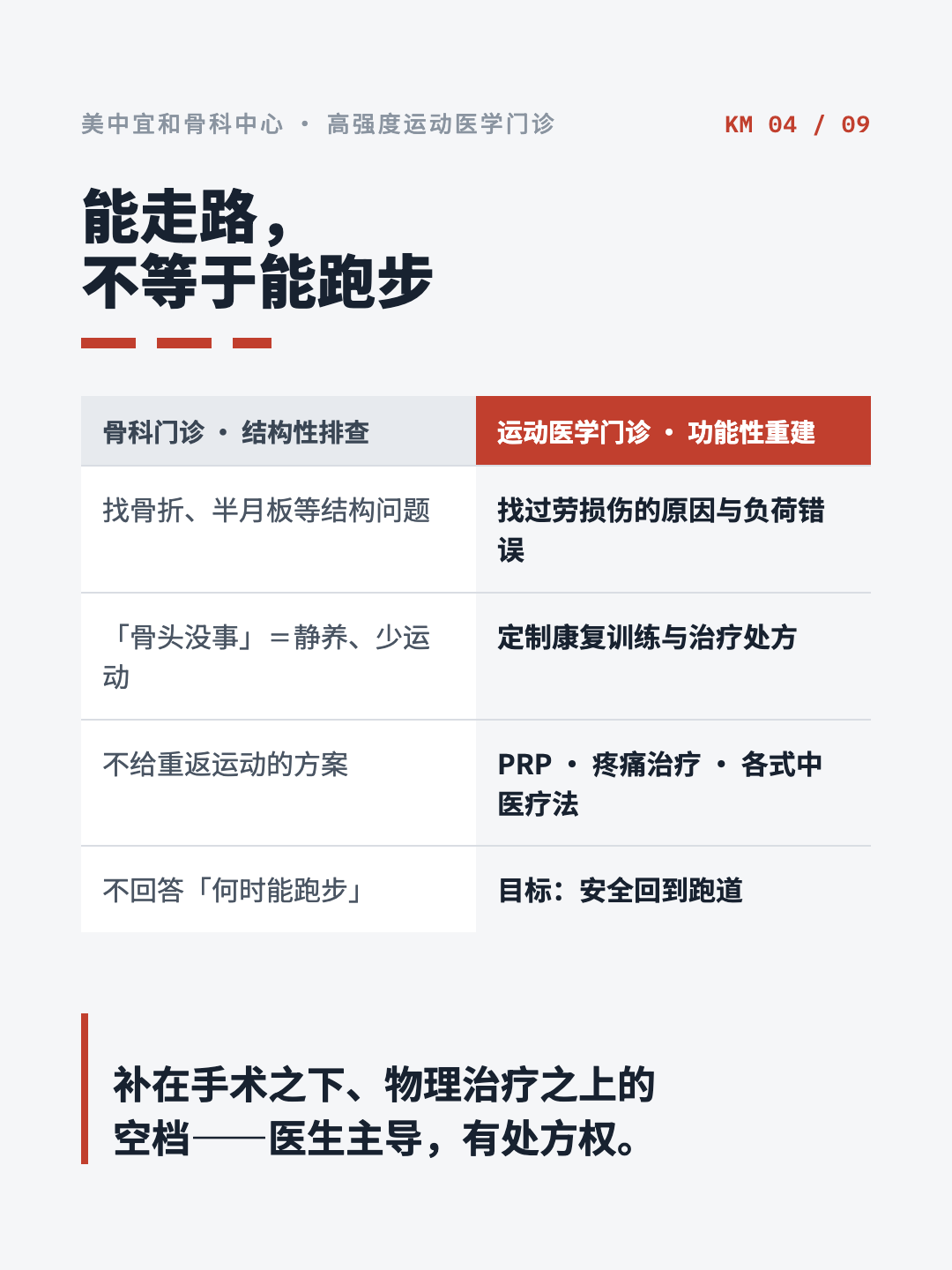
"Orthopedics answers whether you can walk. Sports medicine answers whether you can keep running."
— AMCARE Orthopedics Center, High-Intensity Sports Medicine Clinic
What the Clinic Actually Does: Four Tiers, Rehabilitation First
In the traditional pathway, a sports injury faces two endpoints: surgery if it is serious, physiotherapy if it is mild. The middle ground has long lacked a complete, physician-led, non-surgical entry point — recurring runner's knee, an ankle that stays unstable after a sprain, a post-operative patient who has no idea how to train for return to sport.
The clinic's service pathway follows the international sports medicine treatment ladder: rehabilitation first, surgery last.
- Tier 1 — Load management and exercise therapy. The international first-line approach, such as progressive loading programmes for Achilles tendinopathy.
- Tier 2 — Physiotherapy modalities. Shockwave therapy and other rehabilitation treatments that can be delivered within an outpatient visit.
- Tier 3 — Injection therapy. PRP, pain interventions and ultrasound-guided injection.
- Last resort — Minimally invasive surgery. When surgery is genuinely required, the clinic refers the patient into a surgical team so that care remains a closed loop.
Treatments are performed by the physician, not delegated
In many settings, the doctor writes the order and someone else delivers the treatment. Here the physician performs the outpatient procedures personally. Report interpretation, plan adjustment and follow-up after the first visit are all handled by the same doctor — which is what makes continuity of care possible.
Who It Is For: Six Groups
This is not a service reserved for professional athletes. Six broad groups of active people can reasonably expect to find an answer here:
- Professional athletes — high-intensity training support and injury management for competitive sport.
- Long-term recreational athletes — runners, swimmers, ball-sport and winter-sport participants who have trained for years.
- Patients who prefer conservative care — people who want to try non-surgical treatment first.
- Return-to-sport patients — anyone with a specific goal of regaining, or exceeding, their previous level of function.
- People training for capability — those who want to build strength, speed and endurance rather than treat a specific injury.
- Patients with chronic pain — osteoarthritis, related chronic pain and post-operative pain requiring coordinated management.
Eight Services Under One Roof
The clinic is organised around a single arc — from injury, to recovery, to becoming stronger than before — rather than around a single body part.
- Sports trauma and sports-related illness. Acute and chronic injuries of the spine, shoulder, elbow, wrist, hip, knee, ankle and foot, plus exercise-related internal medicine problems such as exercise-induced asthma, gastrointestinal syndrome and exertional headache.
- Rehabilitation and training guidance. Rehabilitation methods and training instruction for muscle, tendon, ligament, cartilage and bone injuries, including individualised post-operative rehabilitation.
- Individualised exercise prescription. Exercise therapy for frozen shoulder, cervical spondylosis, low back and leg pain, and osteoarthropathy; programmes to improve cardiorespiratory fitness, muscle strength, joint function and bone density.
- Sports nutrition support. Precise nutritional assessment covering energy, carbohydrate, protein, fat, electrolytes, minerals and vitamins, plus pre-race, in-race and post-race recovery and weight management.
- Athletic performance testing. Physical examination, blood biochemistry and physiological indicators, and functional capacity assessment for distance running, swimming, winter sports, football and basketball.
- Exercise guidance across ages and chronic disease. Individualised physical activity plans for children, adolescents, older adults, women and people with chronic conditions.
- Injury prevention and education. Professional guidance and public education on preventing sports injury, reducing exercise-induced fatigue and improving performance.
- Sports medical clearance. Exercise contraindications and injury prevention for patients with cardiovascular, respiratory and digestive chronic disease.
A Team With National-Team Bench Depth
The clinic is led by senior sports medicine specialists and works alongside current and former team physicians for national and provincial sports teams, together with AMCARE's own orthopedics and sports medicine physicians. The result is a team that covers diagnosis, treatment, rehabilitation, training and nutrition in one place.
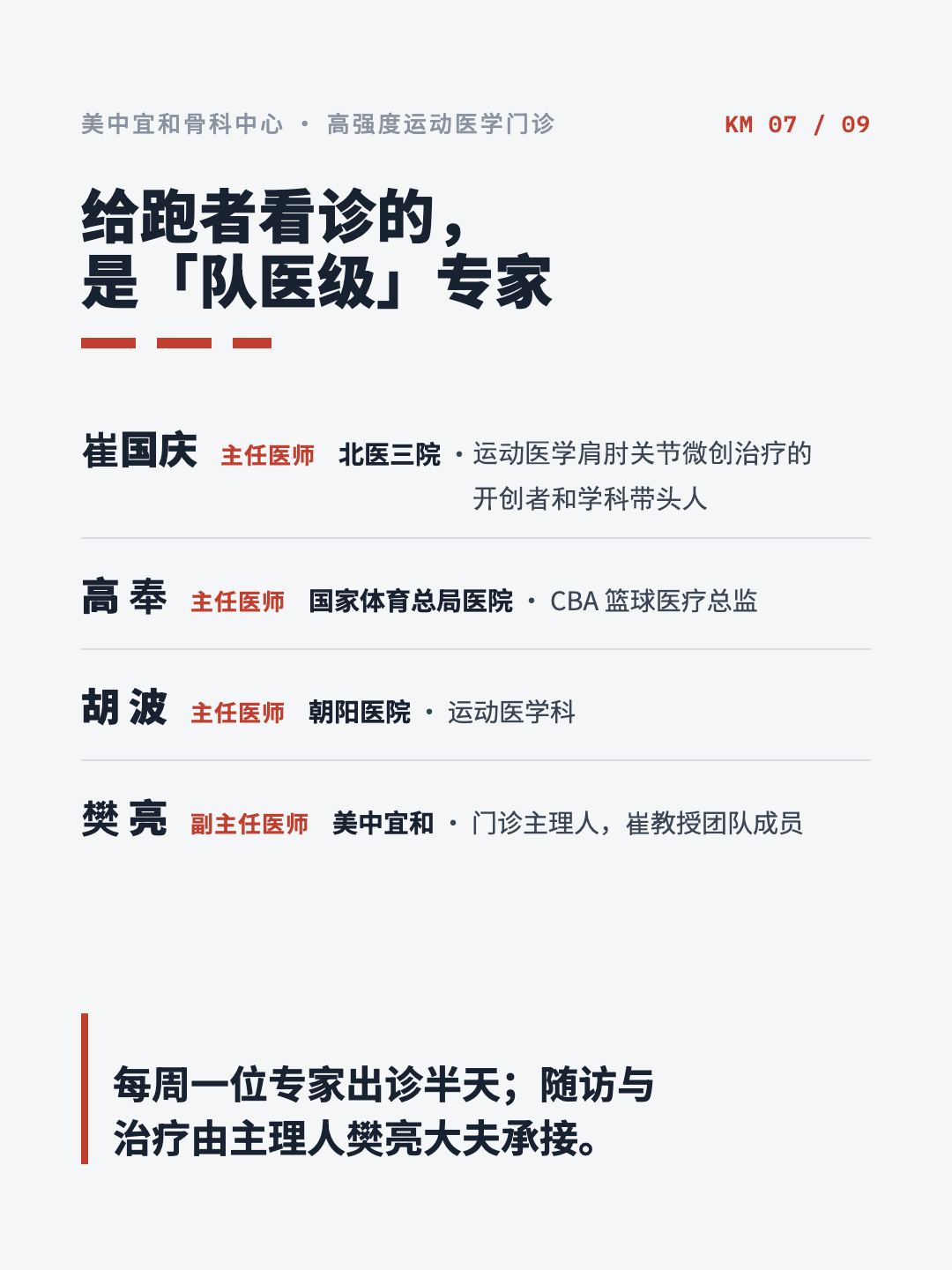
Dr. Fan Liang, Associate Chief Physician at AMCARE, leads the clinic and is a member of Professor Cui Guoqing's team. He personally takes on report interpretation, plan adjustment and follow-up after the initial consultation, so each patient's care stays with one physician from start to finish.
In addition, a senior specialist from a top-tier hospital holds a half-day clinic every week, drawn from institutions including Peking University Third Hospital, the National Sports Administration Hospital and Beijing Chaoyang Hospital. Among them are a chief physician who has served as a medical adviser to the Chinese Olympic Committee and as team doctor to multiple Olympic champions, and the medical director of CBA basketball.
How the visiting-specialist slot works
Expert slots are a scarce entry point. The initial assessment and subsequent treatment are carried on by the lead physician's team, so the patient is not left without a plan once the visiting specialist's half-day ends. If surgery is genuinely needed, the clinic arranges referral into an appropriate surgical team.
Built Around the Beijing Marathon Season
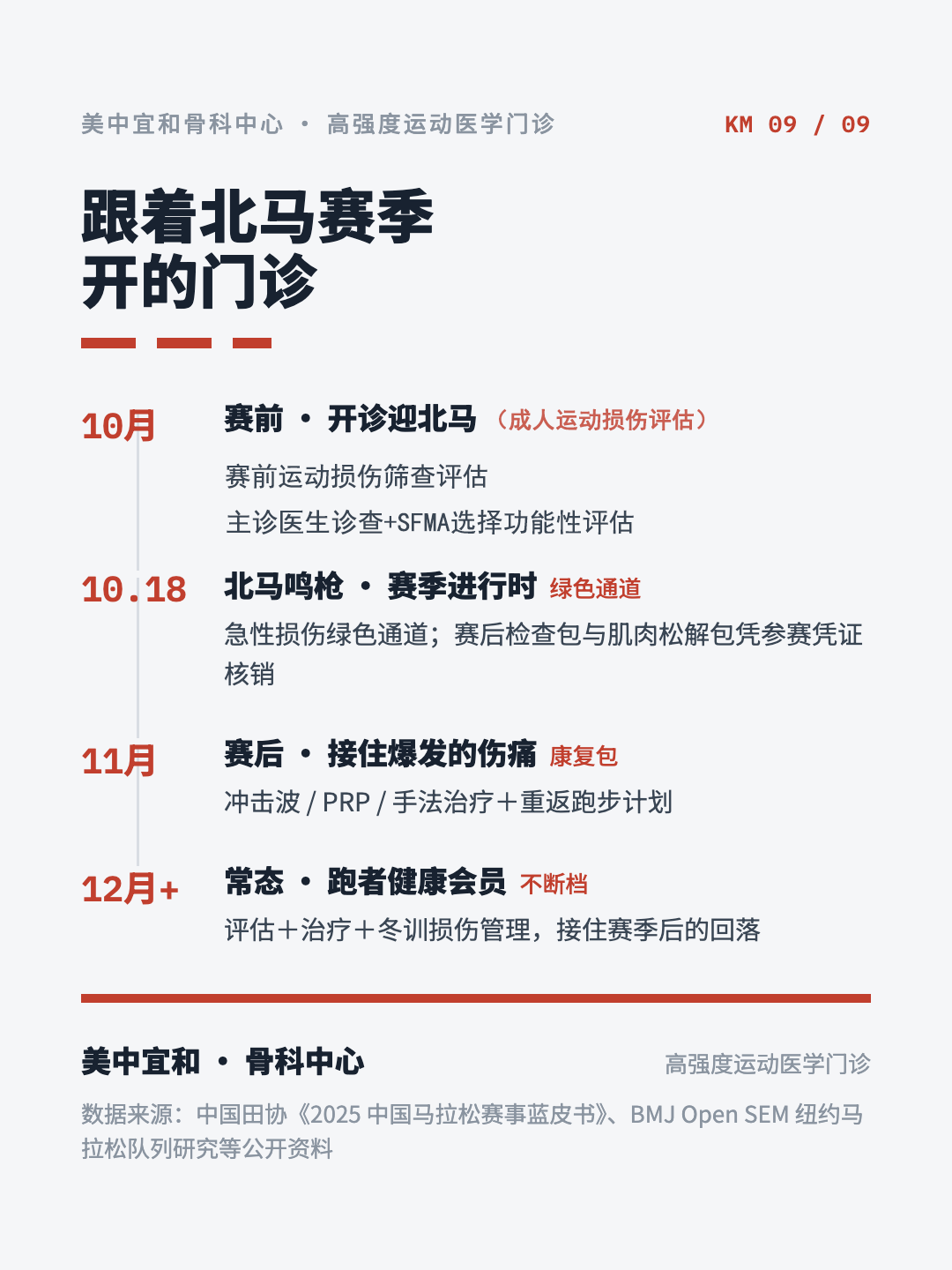
The clinic opened in the middle of the road-running calendar, and its first programme was designed around the 2026 Beijing Marathon, held on October 18. Two runner packages are available to anyone holding an official Beijing Marathon credential:
- Post-race injury and pain assessment — ¥599 (standard price ¥1,825), including physician and rehabilitation specialist examination, colour Doppler joint ultrasound and a comprehensive exercise assessment, plus a risk-assessment questionnaire and post-race health guidance.
- Post-race muscle release — ¥99 (standard price ¥400), covering fascial release techniques for muscle relaxation.
With the same credential, add-on items — nutrition clinic, X-ray, MRI, stress echocardiography, shockwave, neuromuscular electrical stimulation and intermittent pneumatic compression — are available at a 10% discount. Both packages are valid until February 28, 2027.
Booking is by phone on 4000-10000-16 or through the AMCARE mini-programme. On arrival, the orthopedics nursing station verifies identity and issues the voucher; the physician and rehabilitation specialist then examine the ankle, knee and hip as indicated, and a functional assessment of lower-limb strength, alignment, running posture and balance produces a written comprehensive assessment and high-intensity exercise guidance report.

Why This Matters If You Are Travelling to China
Most international patients do not arrive with a single acute injury. They arrive with a history: months of a knee that swells after every long run, a shoulder that clicks, a back that flares on long-haul flights — and a stack of imaging from home that shows "nothing serious".
What such a patient usually needs is not another scan. It is a physician who will take the training history seriously, examine function rather than only structure, and write a plan that can be followed after returning home. A clinic built around continuity — one doctor from assessment through follow-up — is a practical fit for that, and it is the reason this service is now listed among AMCARE's international patient offerings.
AMCARE's international patient team can arrange interpretation, appointment scheduling and coordination with the orthopedics and rehabilitation departments. Patients travelling specifically for assessment are advised to bring any previous imaging and a short training log; both materially change the quality of the first consultation.
Reviewed by
Dr. Fan Liang is Associate Chief Physician at AMCARE Orthopedics Center and lead physician of the High-Intensity Sports Medicine Clinic. A member of Professor Cui Guoqing's team, Dr. Fan leads the clinic's assessment, treatment and follow-up pathway.
Dealing With an Injury That Won't Settle?
AMCARE's orthopedics and international patient teams provide sports injury assessment, ultrasound and imaging, injection therapy, rehabilitation planning and return-to-sport testing for patients travelling to China.