The Patient: A PhD Student's Dilemma Across Two Continents
Young woman in late 20s, PhD candidate in the United Kingdom
Multiple uterine fibroids (largest serosal >7cm, smallest ~4cm) + iron-deficiency anemia
No visible scars wanted · Fast recovery needed · Only 4-week window before returning to UK
Same-day ambulatory, discharged Day 2, no pain medication needed post-discharge
Xiao Lin (name changed), a Chinese PhD student completing her dissertation in the UK, had been dealing with progressively worsening menstrual symptoms since mid-2024:
- Heavy bleeding: Two days each cycle soaking through pads and overnight protection, with embarrassing leakage onto clothing
- Anemia symptoms: Chronic fatigue, dizziness, weakness developing over months
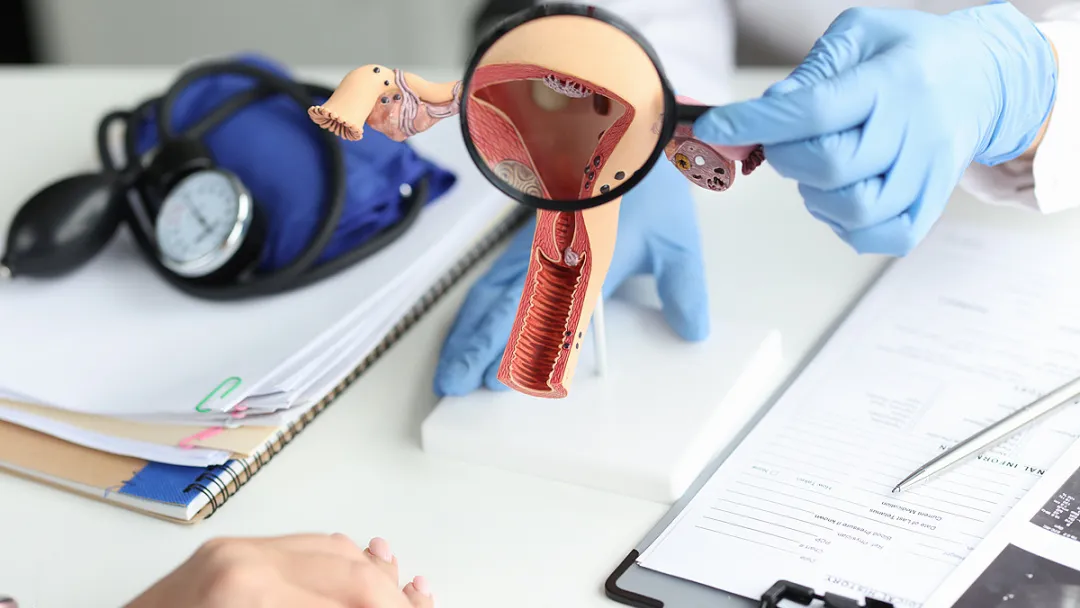
- Diagnosis confirmed June 2025: Three uterine fibroids detected via ultrasound — largest subserosal fibroid exceeding 7cm, smallest nearly 4cm, plus iron-deficiency anemia
The Reality of Overseas Medical Care
"Being sick in a foreign country feels isolating enough. The healthcare system made it infinitely worse."
In the UK's NHS system, Xiao Lin faced a cascade of barriers that many international patients encounter:
| The UK Healthcare Journey | |
|---|---|
| Step 1 | Book General Practitioner (GP) appointment for initial diagnosis |
| Step 2 | Wait 1–2 months for GP referral → ultrasound scan |
| Step 3 | Fibroids found → re-book GP appointment to discuss findings |
| Step 4 | Wait another 1–2 months for specialist hospital referral |
| Step 5 | Specialist recommends "observe with medication for 6 months" |
| If Surgery Needed | Additional 6+ month wait for elective operating room slot |
| Total Elapsed Time | 12–18+ months from first symptom to potential treatment |
For Xiao Lin, this timeline was unacceptable. Her fibroids were already causing significant anemia, disrupting her ability to concentrate on her doctoral research, and she only had a one-month vacation window to address the problem surgically.
Her Three Non-Negotiable Requirements
🩹 No Visible Scars
As a young woman who has not yet had children, she was deeply concerned about abdominal scarring affecting body image.
⚡ Rapid Recovery
She needed to return to the UK within weeks to resume her dissertation work. Extended downtime was not an option.
👨👩👧 Family by Her Side
Facing her first-ever surgery, she wanted her family present — something impossible while abroad alone.
Coming Home: Finding the Right Surgeon in Record Time
After weighing all options, Xiao Lin decided to return to China for treatment during her brief holiday break. But finding a top-tier surgeon and hospital within her tight window seemed like an impossible task — until a family connection opened an unexpected door.
Through a family recommendation, she learned about AMCARE Beijing. A previous positive experience with AMCARE's efficiency and professionalism gave them confidence. Then came the breakthrough: Professor Sun Dawei, a renowned gynecological surgeon from Peking Union Medical College Hospital (PUMCH / 协 and), would be holding a specialist clinic at AMCARE Beijing that very month.
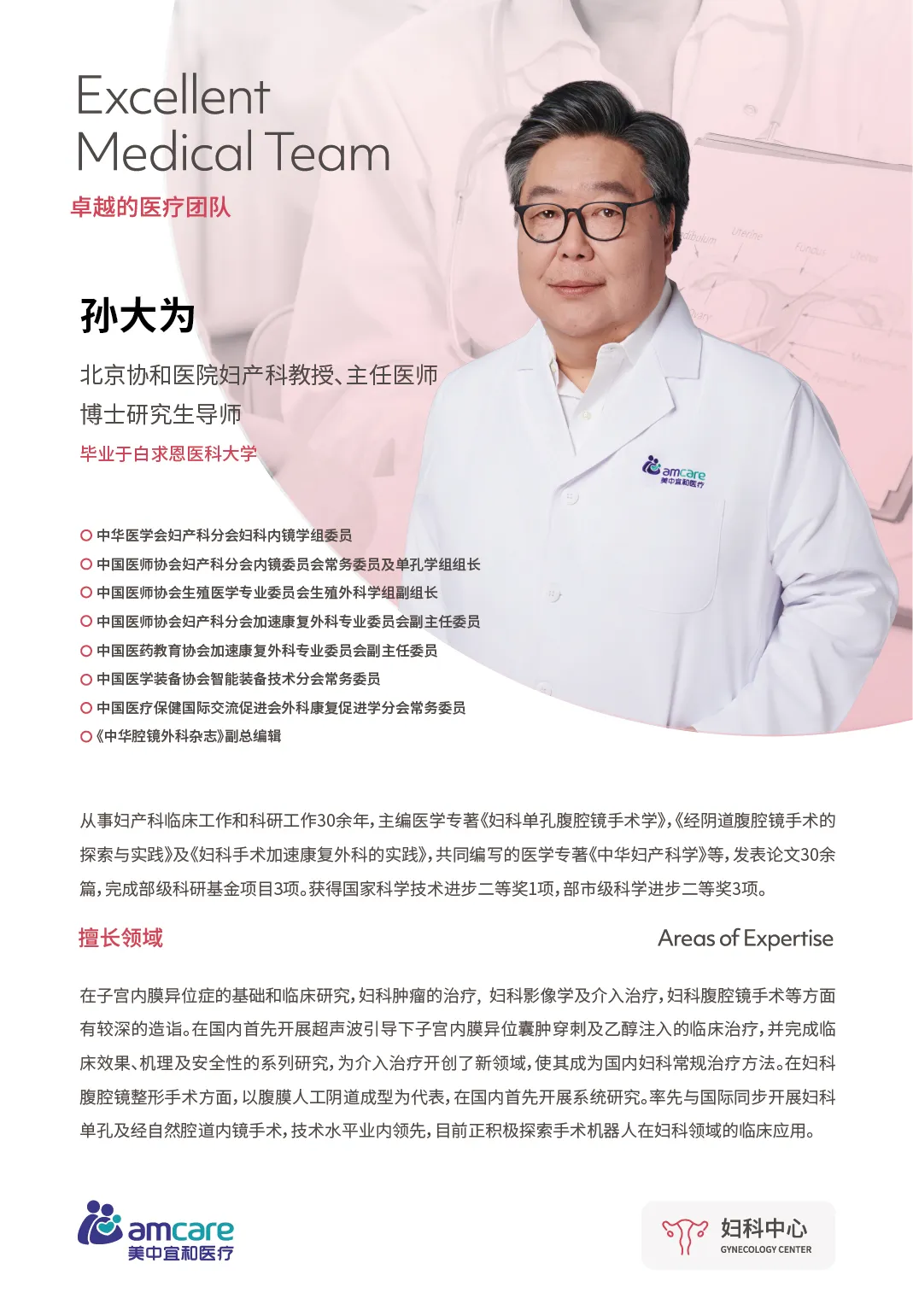
This was the shortcut Xiao Lin desperately needed:
- Skip months of "blind" doctor-shopping
- Direct access to one of China's most respected gynecological surgeons
- A hospital known for international-standard service quality
- All coordinated within her limited timeframe
At the specialist clinic, Prof. Sun carefully reviewed all of Xiao Lin's diagnostic reports from the UK, assessed her clinical profile, and engaged in a thorough discussion about her concerns. His warm demeanor and clear, jargon-free explanations immediately eased her anxiety.
The Treatment Plan: Single-Port + ERAS
Based on comprehensive evaluation, Prof. Sun designed a two-pillar treatment strategy specifically for Xiao Lin's situation:
Treatment Protocol
| Procedure | Transumbilical Single-Port Laparoscopic Myomectomy (经脐单孔腹腔镜子宫肌瘤剔除术) |
| Surgeon | Prof. Sun Dawei, Chief of Gynecology, PUMCH / AMCARE Beijing |
| Protocol | ERAS (Enhanced Recovery After Surgery) Accelerated Rehabilitation |
| Incision | Single ~2–2.5 cm incision hidden within the natural umbilical fold |
| Fibroid Targets | Three fibroids: largest serosal (>7cm), medium (~5–6cm), small (~4cm) |
| Fertility Preservation | Full — patient is young and nulliparous; uterus integrity is paramount |
| Pre-op Workup | CBC, MRI for precise tumor localization, tumor markers, full anesthesia assessment |
Why Single-Port Instead of Conventional Laparoscopy?
Conventional Multi-Port Laparoscopy
- 3–4 incisions across the abdomen
- Visible permanent scars
- More nerve/vessel damage to abdominal wall
- Longer recovery time
- More postoperative pain
Transumbilical Single-Port Laparoscopy
- One incision hidden inside the navel
- Virtually invisible scar after healing
- Minimal trauma to abdominal wall
- Faster recovery, less pain
- Better cosmetic outcome — critical for young patients
"The patient is young and hasn't had children yet. We must win this 'uterus protection battle' — remove every fibroid completely while preserving the structural integrity of her uterus for future fertility." — Prof. Sun Dawei
The Procedure: Precision Under Pressure
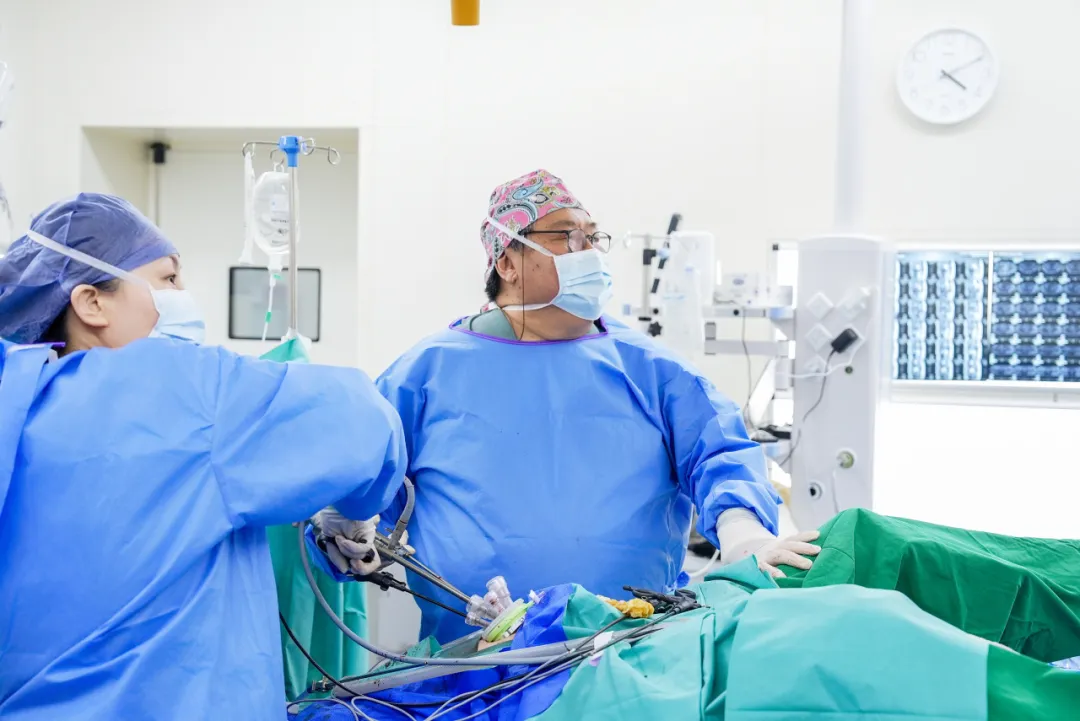
Through the single umbilical portal, Prof. Sun navigated a uniquely challenging surgical field:
- Three distinct fibroid locations requiring different dissection angles from one fixed entry point
- Careful identification and preservation of the bladder, ureters, and major pelvic blood vessels
- Complete enucleation of all three masses without breaching the endometrial cavity
- Precise multi-layered uterine wall reconstruction after each removal
With over 30 years of experience and thousands of laparoscopic procedures behind him, Prof. Sun operated with the calm precision of someone who has performed this operation countless times — navigating the confined space, identifying anatomical landmarks, and systematically excising each fibroid.
ERAS: The Game-Changing Recovery Protocol
What made Xiao Lin's remarkably fast recovery possible was AMCARE's full implementation of ERAS (Enhanced Recovery After Surgery) — a evidence-based perioperative care protocol that redefines what "recovery" means after major surgery.
📋 ERAS Protocol — Step by Step
| Phase | What Happened |
| Pre-Op |
• Shortened fasting period — allowed carbohydrate drink morning of surgery • No mechanical bowel preparation (no enema) • Patient education session with nursing team • Anesthesia team conducted pain assessment & customized multimodal analgesia plan |
| Intra-Op |
• Laryngeal mask airway (LMA) instead of endotracheal intubation → less throat discomfort • Active body temperature management throughout • Precise fluid balance control to minimize physiological stress • Tight coordination between surgical and anesthesia teams |
| Post-Op |
• Broke traditional "NPO after surgery" rule — allowed sips of water same afternoon • Encouraged early mobilization: walked to restroom independently same day • Only an 8cm waterproof dressing over the navel as reminder that surgery happened • Multimodal pain management eliminated need for additional opioids |
Dr. Xu, Chief of Anesthesiology, worked hand-in-hand with Prof. Sun's team to implement every element of this protocol — demonstrating how true multidisciplinary collaboration transforms patient outcomes.
Results: "It Felt Like a Dream"
| Recovery Timeline | |
|---|---|
| Same day (afternoon) | Awoke in recovery room → returned to ward → drank water → walked to bathroom independently |
| Pain Level | "Only mild soreness at the navel — far less than imagined" |
| Day 2 | Met all discharge criteria; left hospital with minimal discomfort |
| Post-Discharge | Stopped taking pain medication entirely; began physical recovery plan |
| Next Steps | Returns to the UK on schedule to continue her doctoral dissertation |
"Being sick in a foreign country makes you feel helpless. The difficulty of getting medical care abroad amplifies that helplessness exponentially. I feel incredibly fortunate to have found the right hospital so quickly — it let me get back to normal life fast!" — Xiao Lin
A 10,000-mile medical journey, completed successfully. This case demonstrates exactly why AMCARE's combination of top-tier surgical expertise, cutting-edge minimally invasive techniques, and patient-centered accelerated recovery protocols matters — especially for patients traveling from overseas.
What This Means for International Patients
Xiao Lin's story reflects a growing trend: patients who live or study abroad choosing to return to China for specialized medical care. For these patients, AMCARE offers distinct advantages:
- Zero Wait Times for Specialist Access — Direct booking with leading specialists without months-long referral chains
- Top-Tier Surgical Expertise — Collaboration with professors from China's premier hospitals (e.g., PUMCH / 协 and)
- Advanced Minimally Invasive Techniques — Single-port laparoscopy, robotic surgery, and other ultra-minimally invasive options
- ERAS Accelerated Recovery — Evidence-based protocols that dramatically shorten hospital stays and recovery periods
- Multilingual Patient Coordination — Dedicated international patient services team from inquiry through follow-up
- Tight Schedules Accommodated — Efficient workflows designed for patients with limited time windows
- Family-Centered Care — Welcoming environment where family members can participate fully in the care process
Traveling from Abroad for Medical Care?
Whether you're dealing with fibroids, planning IVF, seeking a second opinion, or exploring any women's health procedure — our international patient team can coordinate your entire journey, from initial consultation to post-surgery follow-up.