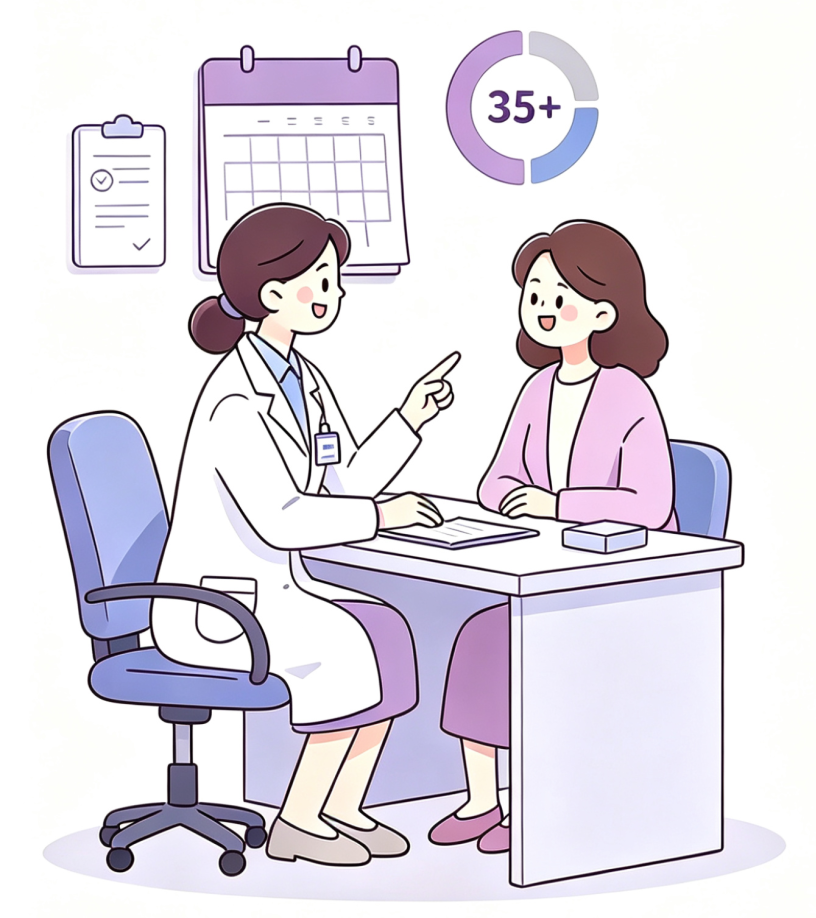
"Am I Already Too Old to Have a Baby?"
Changing patterns of marriage and childbearing mean more women are planning a first or subsequent pregnancy after 35. The same two questions come up in almost every consultation: "Does my age make me a high-risk mother?" and "What tests and preparations do I actually need?"
The honest answer is that pregnancy after 35 does deserve closer preconception assessment and closer antenatal management — but age on its own is not the deciding factor. Careful planning and a well-adjusted physical state matter at least as much, and both are within your control.
Below is a practical guide to the three things that matter most: understanding what "advanced maternal age" means, the nine preparations to complete before conceiving, and the tests and timeline that turn good intentions into an actionable plan.
What Counts as Advanced Maternal Age?
From a physiological standpoint, 23 to 30 is the period of peak female fertility, and 30 to 35 is considered the second-best window. Medically, a pregnancy is defined as advanced maternal age when the mother will be 35 years or older at the expected date of delivery.
China's 2024 Expert Consensus on Antenatal Management of Advanced Maternal Age places particular emphasis on stratified management: women aged 35 to 39 and women aged 40 and above are not a single group, and their antenatal strategies differ.
As women age, both the number and the quality of eggs decline, and pregnancy risks rise accordingly:
- Ectopic pregnancy and spontaneous miscarriage
- Fetal chromosomal abnormalities
- Placenta previa and fetal growth restriction
- Preterm birth and intrauterine fetal death
- Higher cesarean delivery rates
- Pregnancy complications such as gestational diabetes and pre-eclampsia
Higher risk is not the same as certain harm
These are statistical associations across a population, not a prediction for any individual woman. Many women over 35 conceive and deliver healthy babies without complications. What the data justifies is earlier assessment and closer monitoring — not anxiety, and certainly not giving up on a plan you want.
Nine Things to Prepare Before You Start Trying
Preconception preparation is not a single appointment. It is a set of adjustments that begin months before conception — and each one below can be worked through with your obstetrician.
1. Tell your doctor your full history
Disclose chronic conditions, previous pregnancies and deliveries, and any surgeries. Diabetes, chronic hypertension, kidney disease, thyroid dysfunction and heart disease in particular need to be on the table so that pregnancy risk can be assessed properly.
2. Have a specialist clear you first
If you have a genetic condition or an infectious disease — hepatitis, tuberculosis, syphilis or HIV, for example — see the relevant specialist for an assessment and specific guidance before you begin trying to conceive.
3. Work on nutrition and exercise together
Keep meals balanced with both meat and vegetables, and with both refined and whole grains, so that iron, folate and vitamin intake is adequate. Choose exercise suited to your condition — brisk walking, swimming, yoga — and aim to keep your body mass index (BMI) in the healthy range.
4. Do not skip folic acid
Most women planning a pregnancy need the standard recommended dose of folic acid. If you have previously had a baby with a neural tube defect — anencephaly, spina bifida or hydrocephalus — the dose must be adjusted under medical supervision.
5. Take no medication without advice
If you develop a cold, a fever or any other illness while preparing for or during pregnancy, do not self-medicate. See a doctor promptly and choose drugs that are known to be safe in pregnancy.
6. Keep pets, but keep them safely
Living with a pet before and during pregnancy is acceptable. Avoid excessively close contact, wash your hands after handling animals, deworm and vaccinate pets on schedule, and keep the home environment clean.
7. Change the habits that matter
Stop smoking and stop drinking. Avoid chronic sleep deprivation, and step back from high-intensity work schedules, high-noise environments and any situation involving domestic violence.
8. Steady your state of mind
Anxiety and unrelieved stress raise the risk of psychological difficulties during pregnancy and after delivery. Build in ways to release pressure, and treat emotional preparation as part of the medical plan rather than a luxury.
9. Get a fertility assessment — at the right moment
If you are 35 or older and have not conceived after six months of trying, an infertility evaluation is recommended. If you are over 40 and planning a pregnancy, see a specialist early rather than waiting out the six months.

Which Tests Do You Actually Need?
Preconception testing is the foundation of a healthy pregnancy. Beyond the standard workup, women over 35 are usually advised to add targeted assessments.
Standard preconception workup
The core panel typically includes:
- Gynecologic ultrasound
- Complete blood count and urinalysis
- Liver and kidney function
- Hepatitis B, HIV and syphilis screening
- TORCH screening — toxoplasma, rubella virus, herpes simplex virus and cytomegalovirus
- Vaginal discharge microscopy
- Chlamydia and gonorrhea testing
Completing these before conception helps rule out inherited and infectious conditions, builds a clear picture of your baseline health, and gives your clinician something concrete to plan around.
Fertility assessment
For women over 35, a fertility assessment is the part of the workup that most directly informs the timeline:
- Ovarian reserve: baseline sex hormones (FSH, LH, E2, progesterone, testosterone and prolactin), anti-Müllerian hormone (AMH) and ultrasound.
- Uterine and fallopian tube anatomy and function.
- Systemic disease review: cardiovascular disease, diabetes, thyroid disease and kidney disease — all of which should be identified and managed before pregnancy rather than during it.
Additional tests worth discussing
Two further tests are often worth raising with your doctor, although neither is part of the basic package: cervical cancer screening and folate metabolism (MTHFR) testing. Both carry real value for older women in assessing preconception risk and guiding supplementation.
How to Plan Your Timeline
For women over 35 with a pregnancy plan, the recommendation is to begin at least three months before conception: use that window to check, assess and adjust your health status, and to receive preconception counselling.
What those three months are actually for:
Adjust nutrition
Rebalance your diet and start folic acid supplementation at the dose your doctor recommends.
Stabilize chronic disease
Bring diabetes, hypertension, thyroid or kidney problems under control before pregnancy, not during it.
Change habits
Stop smoking and drinking, correct sleep patterns, and reduce exposure to harmful physical and chemical factors.
Use reliable contraception
Until you are actively ready to conceive, use a reliable method so the timing stays a decision rather than a surprise.
If you are planning vaccinations, ask your doctor in advance. The interval between vaccination and conception depends on the vaccine type, and whether a given vaccine can be given during pregnancy is a decision for your clinician.

It Takes Two: The Male Factor After 40
Advanced reproductive age is not only a women's issue. For men aged 40 and above, testicular function and sperm quality begin to decline as well. Couples who have tried for more than six months without success should both attend a reproductive medicine consultation — together, not one partner sent ahead as a scout.
The purpose of that visit is straightforward: identify any treatable factor, decide whether assisted reproduction is indicated, and avoid spending another year on a strategy that was never going to work.
"Advanced maternal age comes down to two things: start early, and investigate thoroughly. Age raises the stakes on preparation — it does not remove the possibility."
— Dr. Wang Weiwei, Obstetrics & Gynecology, AMCARE Shenzhen
And one more point that is easy to overlook: mindset matters. Women who work through preconception planning step by step, without treating every cycle as an exam they might fail, tend to do better — emotionally and often clinically. Panic is not a fertility strategy; a plan is.
Reviewed by
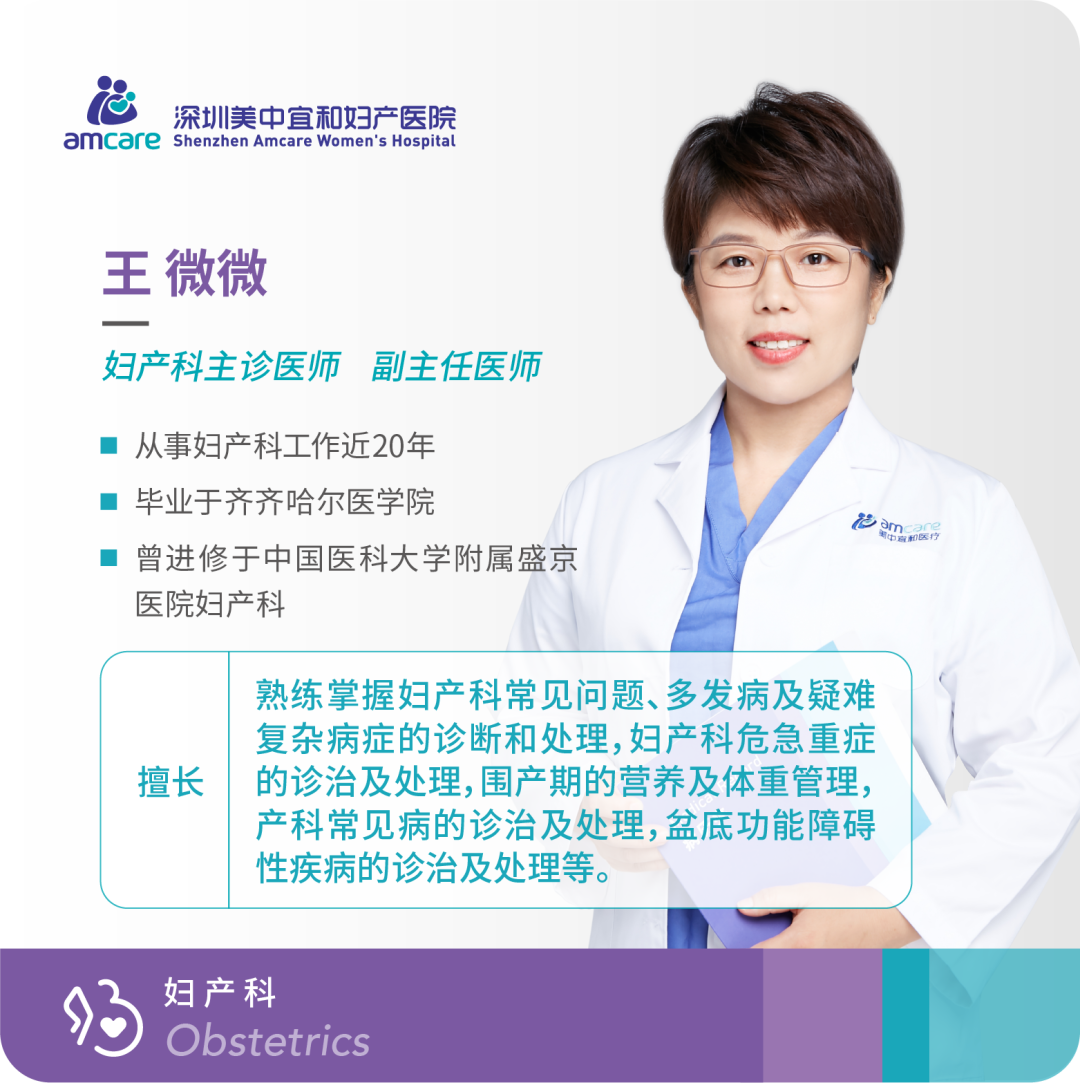
Dr. Wang's clinical focus covers common, frequently occurring and complex obstetric and gynecologic conditions, the management of obstetric emergencies and critical illness, perinatal nutrition and weight management, and the diagnosis and treatment of pelvic floor dysfunction.
Planning a Pregnancy After 35?
AMCARE Shenzhen's obstetrics and international patient teams provide preconception assessment, ovarian reserve testing, chronic disease review, and coordinated antenatal care for families travelling to China for treatment.