
Why Faces Sag: It Starts Beneath the Skin
As we age, bone volume and ligament support in multiple areas of the face gradually decline. The soft tissue loses its "hanging points" and slowly descends — producing tear trough shadows, the malar-facial groove, deepening nasolabial folds, marionette lines and jowling at the mouth corners, and a blurring jawline.
These changes are not simply "wrinkles." They are the visible result of a structural problem: the skeletal scaffold that once held everything in place is quietly disappearing.
Why Filling the Groove Alone Often Fails
Traditional soft-tissue filler injections mostly stay in the subcutaneous fat layer. The idea is simple: fill the hollow directly. But when the bone foundation underneath has already receded, the ligaments lack a stable anchoring point, and the injected material has no mechanical support — over time, under facial expression and gravity, it tends to disperse and migrate.
Meanwhile, the sagging returns as time passes. Repeated filling around the mouth can also pile up soft tissue, creating a puffy, mask-like appearance. This is the core reason many patients feel they are "getting older the more they fill."
The Key Shift in Thinking
Instead of endlessly filling the groove, the goal becomes: repair the receded bone foundation, reinforce the original ligament attachment sites, and rebuild an invisible mechanical scaffold for the face. Once the support points are restored, their vector pull draws the descended soft tissue backward and upward — and only then is a small amount of filler used for fine refinement.
This is the logic behind bone-support vector lifting injection (bone-phase vector lifting).
Two Treatment Modules: Upper Face and Mid-Lower Face
The bone-support injection system is organized into two major modules — upper face, and mid-lower face — each rebuilding the bone–ligament support line for its region and addressing sagging at different ages.
Upper Face: Temporal Remodeling + Forehead-Base Anchoring
As the frontal and temporal bones lose volume, the brow-eye complex loses its key hanging point: the tail of the brow droops, the upper eyelid loosens, and the skin folds into stubborn gravity-type lines across the nasal bridge.
- Temporal bone-line adjustment: precise placement at the supraorbital-temporal periosteum strengthens the temporal suspension point and restores the relaxed ligament attachment.
- Forehead-base anchoring: working at the deep forehead–temporal hairline layer to improve the upper-third skeletal foundation and lift the entire brow-eye soft tissue upward.
Notably, this treatment does not fill the nasal bridge directly or deliberately augment the brow ridge. Once the tension from skin folding is released, the nasal-bridge lines smooth out naturally and the whole brow-eye area looks softer and more open.
Mid & Lower Face: Zygoma–Mandible Skeletal Support
When the cheekbone loses volume, the mid-face loses its platform: the apple of the cheek slides down, deepening the malar-facial groove and nasolabial fold shadows. When the mandibular angle resorbs, the lower face loses its lateral support — cheek tissue drifts forward toward the mouth, forming the notoriously stubborn marionette pouch, while the jawline turns into a wavy, blurred contour.
By building a skeletal scaffold at the periosteum of the zygomatic arch and the mandibular angle, the treatment restores the lost bone foundation and gives the sagging ligaments firm attachment points again. The outward-and-backward vector pull guides the displaced cheek tissue back into position.
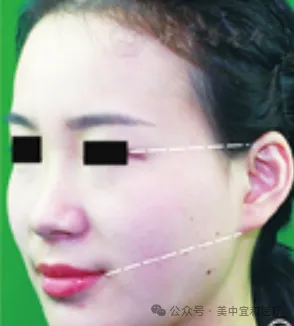
Without mass-filling the nasolabial fold or the marionette area, the deepened folds fade and the groove shadows soften. After the mandibular angle support is rebuilt, tissue stops piling forward at its source — the marionette pouch improves, and the jawline becomes cleaner and more defined.
Targeting the Three Most Common Concerns
1. Tear Trough Shadows
Many people assume a tear trough is simply a soft-tissue hollow. In reality, resorption of the orbital and temporal bony support points lets the whole mid-face descend — casting a heavy shadow that looks like a deep tear trough.
Bone-support vector lifting first reinforces the lateral orbital and temporal anchors, lifting the entire mid-face upward to relieve the downward projection. Only then is a small amount of superficial material used to refine the groove. Compared with direct tear-trough filling, this approach helps reduce the risks of Tyndall effect, local lumpiness, and aggravated under-eye bags.
2. Nasolabial Folds (Smile Lines)
Nasolabial folds come in two types: volume-loss type and compression type. After age 35, most deepening folds come from the continuous compression of a descending cheek.
By strengthening the zygomatic arch support point, the treatment pulls the descended cheek tissue back and up, relieving the pressure on the fold — the line naturally becomes shallower. This avoids the facial widening and expression stiffness caused by injecting large volumes directly into the fold.
3. Stubborn Marionette Pouches
Simple filling around the mouth or superficial thread embedding often brings limited improvement to marionette pouches — and can make the lower face look even heavier.
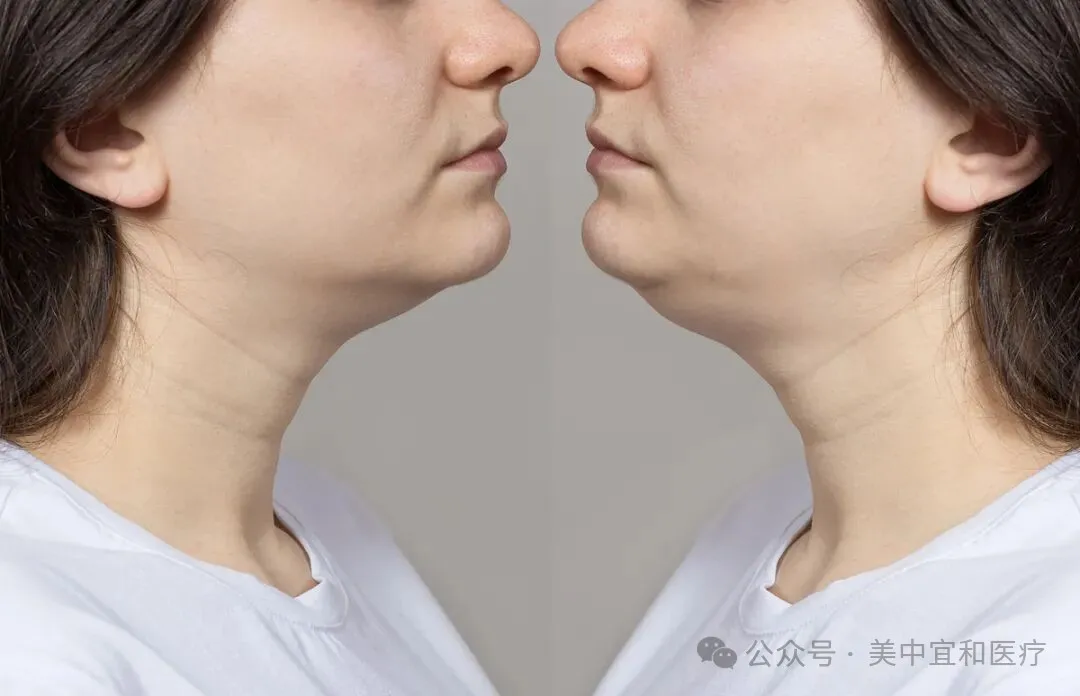
The bone-support approach strengthens the mandibular-angle and pre-auricular lateral scaffold, pulling the forward-piled pouch tissue backward, combined with a local fine-grid technique to tighten the fascia layer. The bulge improves at its mechanical source — without thickening the perioral soft tissue, for a light, natural contour.
Important Things to Know Before Treatment
- It does not replace surgery. Bone-support vector lifting cannot fully substitute for thread lifting or surgical facelift. When soft-tissue sagging is severe, a physician should evaluate whether combined surgical treatment is appropriate.
- Precision is everything. Every anchor point must reach the periosteum. Small deviations in placement, angle, or dosage can fail to achieve vector lifting — or cause swelling, unnatural shape, or ligament imbalance. Choose a licensed hospital and an experienced physician.
- Maintenance is expected. Materials implanted at the periosteal layer degrade gradually with metabolism, and the skeletal scaffold effect slowly fades. Periodic maintenance following medical advice is needed to sustain the mechanical support.
- It is not for everyone. People with acute dermatitis or infection at the treatment area, allergy to injectable materials, or serious autoimmune disease are not suitable candidates. During consultation, the physician should determine whether aging is bone-resorption type, volume-loss type, or severe skin-laxity type — and customize the plan. Never copy someone else's treatment template.
"The goal of bone-support injection is to return tissue to its original physiological position — not to pile up volume without limit."
— Dr. Wang Li, Director of Non-Surgical Center, AMCARE Beijing
By starting from the consumed skeletal support points — forehead–temporal co-anchoring for the upper face and zygoma–mandible scaffold rebuilding for the mid-lower face — bone-support vector lifting uses mechanical vector traction to reposition soft tissue, improving tear troughs, malar-facial grooves, nasolabial folds, and marionette pouches as a system.
Considering Non-Surgical Facial Rejuvenation in Beijing?
AMCARE Beijing's non-surgical center and international patient team provide facial aging assessment, personalized injection planning, and coordinated care for patients from overseas.