What Happened in Baltimore
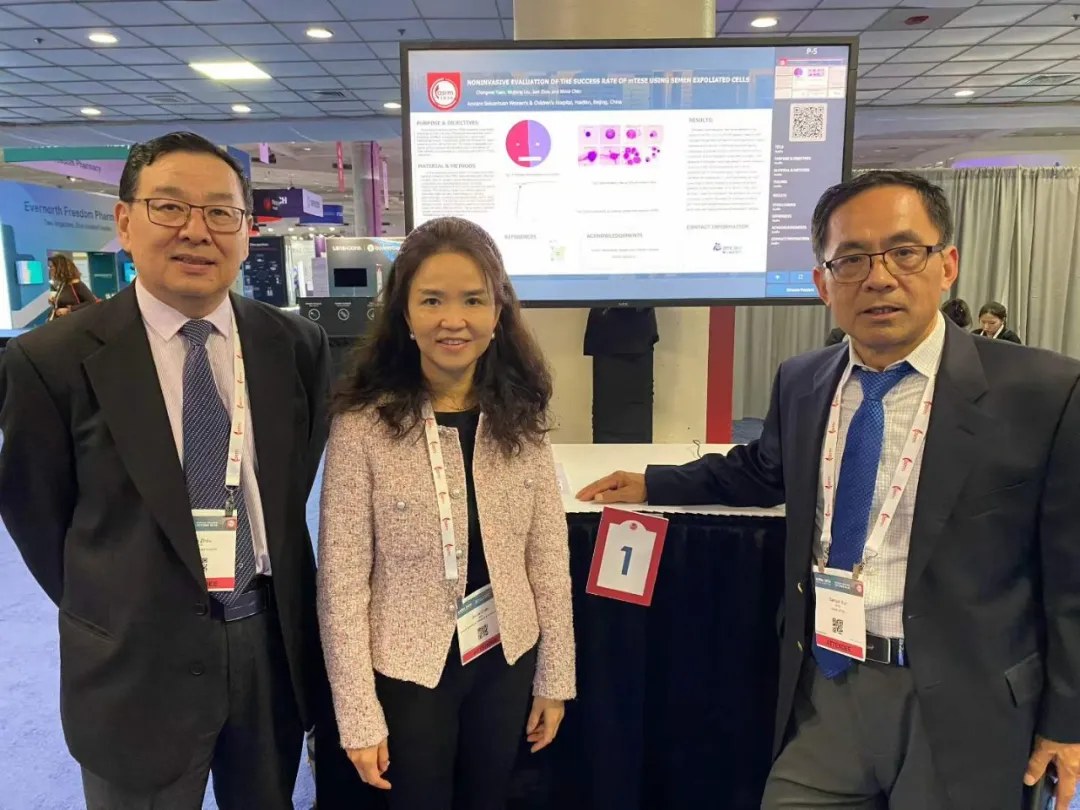
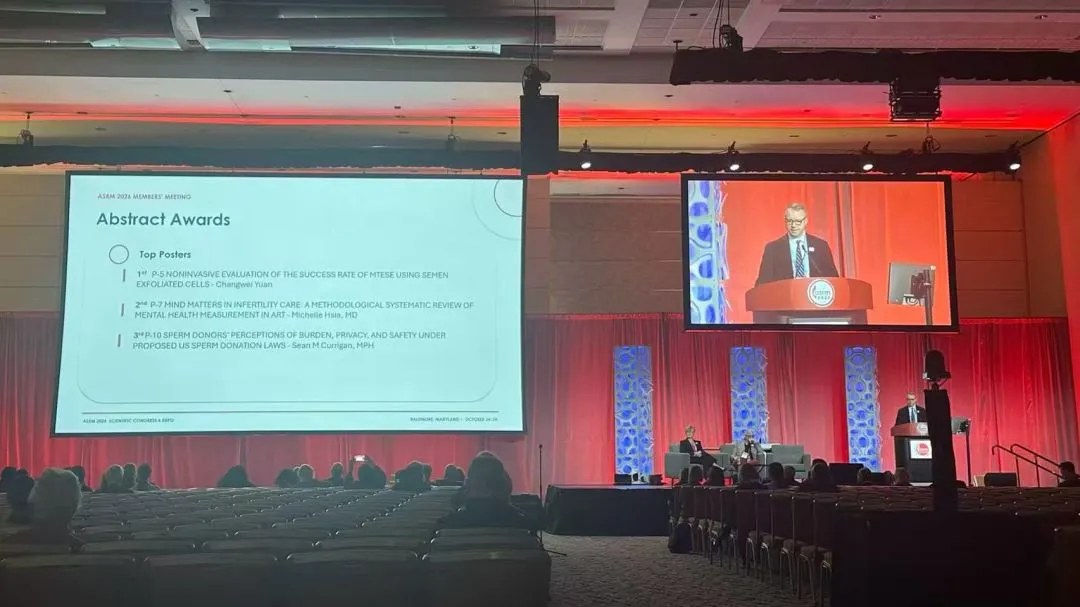
On 29 October Beijing time, news came from the 82nd annual meeting of the American Society for Reproductive Medicine in Baltimore, Maryland. A study from the AMCARE reproductive center in Beijing, with laboratory scientist Changwei Yuan as first author, had been named the ASRM Scientific Congress Overall First Place Poster. The congress ran from 24 to 28 October and received roughly 1,800 poster submissions; a Top 10 shortlist was drawn by committee review, and the shortlisted teams then presented and answered questions on site before the final ranking was decided.
ASRM is among the oldest and most influential societies in reproductive medicine, with members in more than 100 countries, and its annual congress is one of the main stages on which clinicians, embryologists and laboratory scientists present new work. An overall poster award is not a category prize. According to the group, this is the first time in recent years that a China-based first author has taken the congress-wide top poster.
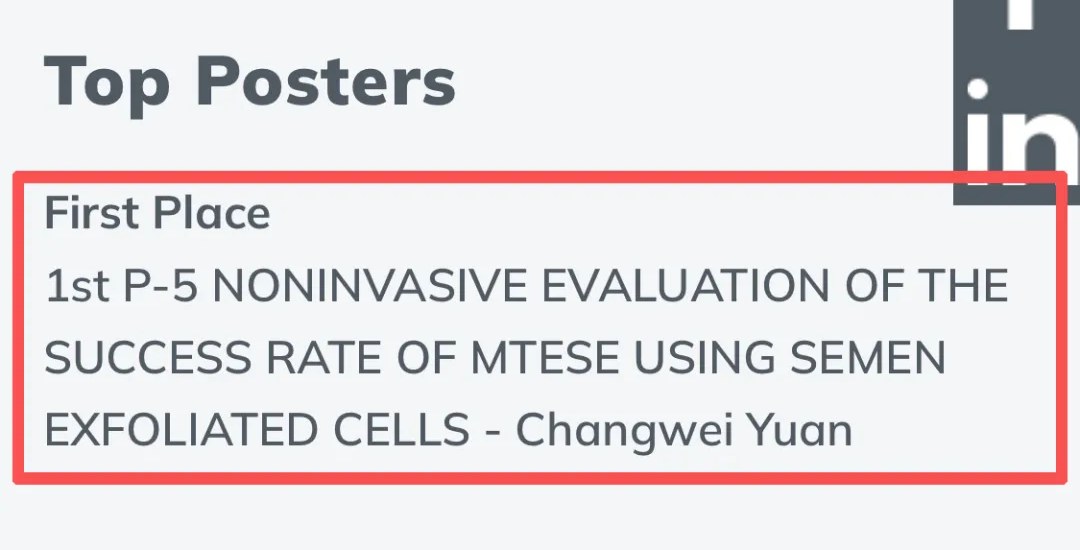
AMCARE was represented at the meeting by Dr Chen Xinna, chief clinical expert in reproductive medicine, Dr Zhou Jian, vice president of the group, and Dr Sun Yongxin, chief embryologist. The award recognises a study, but the study came out of a specific and rather unglamorous clinical problem.
The Guess That Sits Before the Operation
Non-obstructive azoospermia, or NOA, means there is no sperm in the ejaculate not because a duct is blocked but because sperm production itself is impaired. It is one of the harder diagnoses in male infertility. In many men with NOA, however, the testis is not uniformly silent: small patches of active sperm production may survive somewhere within it. Microdissection testicular sperm extraction, or micro-TESE, is the reference procedure for finding those patches and retrieving sperm for use in ICSI.
The difficulty is before the incision. Conventional markers such as serum FSH and testicular volume offer only limited help in predicting whether a given micro-TESE will retrieve sperm. A couple may therefore travel, arrange time away from work, undergo an anaesthetic and a testicular operation, and learn afterwards that nothing was found. For families coming from abroad, that uncertainty is multiplied by the logistics of a single trip. The question the AMCARE study asks is whether a simpler test can narrow it.
Look at the Cells the Testis Sheds
Spermatogenesis is not a sealed process. Cells at various stages of development detach into the seminiferous tubules and can be carried out in the ejaculate. The AMCARE team's idea was to treat those exfoliated cells as a non-invasive window onto what is happening inside the testis, rather than inferring it from hormone levels and organ size.
The laboratory method is semen cytology. A routine semen analysis answers three questions: is there sperm, how much, and how well does it move. In azoospermia it stops at the first of them. Semen cytology goes further: the entire sample is centrifuged, the sediment is smeared and stained, and the slide is read cell by cell for sperm, spermatogenic cells at different stages, inflammatory cells, epithelial cells, Sertoli cells and microorganisms. What it can show is not only whether germ cells are present but which stage they reach, whether their morphology is normal, and where development appears to arrest.
One Hundred and Forty-Seven Patients, Three Numbers
The award-winning study was a prospective cohort of 147 men with NOA who were scheduled for micro-TESE. As reported by the team, exfoliated spermatogenic cells were detected in the semen of 71 of them, or 48.3 percent. Using the presence of round spermatids to predict successful sperm retrieval gave a sensitivity of 85.2 percent and a specificity of 91.5 percent.
A count of two or more round spermatids per high-power field was an independent predictor of retrieval success, with an odds ratio of 8.74 (95 percent confidence interval 3.82 to 20.01, p less than 0.001). In this cohort that finding outperformed both serum FSH and testicular volume. The practical reading is straightforward: a semen sample, examined in a laboratory that knows what to look for, may indicate before any surgery whether the operation has a reasonable chance of finding sperm — and, when the cells seen are mostly immature germ cells or Sertoli cells, that the chance is materially lower.
These are the figures presented in the congress abstract. They come from a single prospective cohort and describe an association with sperm retrieval, not with pregnancy or live birth. Like any diagnostic threshold, the two-cells-per-field cut-off needs validation in other populations and laboratories before it can be treated as a general rule.
What This Test Is Not
It is not a replacement for testicular biopsy or for micro-TESE. The team is explicit that a negative cytology result does not exclude the possibility of retrieving sperm: focal spermatogenesis combined with intratesticular obstruction can produce a false negative. The intended role is pre-operative risk stratification — helping decide who is a reasonable candidate for surgery, who might reasonably be counselled toward other routes to parenthood, and where in the testis a surgeon should look.
That distinction matters most for how the finding is used. A probability estimate is a tool for a conversation, not a verdict. A couple whose result is unfavourable may still choose surgery after discussing alternatives, and a favourable result is not a guarantee. Any such decision belongs in a consultation that takes account of the full history, previous investigations and the couple's own priorities.
Seventeen Years of Looking at Cells
There is a reason this work came from a hospital laboratory rather than a device company. Standardised semen cytology is performed by very few laboratories in China; it is slow, requires a trained eye, and does not lend itself to high-throughput automation. Changwei Yuan studied under Professor Cao Xingwu, a specialist in cell morphology, and has worked in exfoliative semen cytology for seventeen years. Related work from the group has been included in national planning textbooks for medical laboratory science.
The study also drew on clinical interpretation from Dr Chen Xinna, Dr Zhou Jian, Dr Liu Wujiang and Dr Shen Xiaofang. In a field where a single morphological judgement can change a plan, that combination of laboratory and clinical reading is the substance of the work. An award at an international congress is the visible part; the less visible part is years of classifying cells that most reports would simply record as "no sperm".
What It Could Change for a Couple
If the finding holds up, the sequence of care changes shape. A non-invasive semen cytology assessment could come first, giving a pre-operative estimate of retrieval probability; the decision about micro-TESE would then be made with that estimate in hand, together with the couple's history, genetic results and preferences. For some, that means avoiding an operation unlikely to help. For others, it means going into surgery with a clearer reason to expect success. AMCARE's andrology and sperm-retrieval teams apply this reasoning in individual case review rather than as a fixed rule.
For patients travelling to Beijing, two questions are worth settling before booking: whether the assessment and any planned procedure can be completed within one trip, and whether results and operative reports will be issued in English. The international patient team can confirm the schedule, the investigations to bring from home, and the reporting format in advance. None of this changes the underlying medical uncertainty, but it removes a good deal of the avoidable kind.
This article reports a research finding presented at a scientific congress and describes general principles of assessment. It is not individual medical advice. The figures quoted are those reported in the congress abstract and have not been independently verified here; whether any test or procedure is appropriate depends on a full clinical evaluation. Please consult a qualified specialist before making treatment decisions.
About the First Author
Changwei Yuan is deputy chief laboratory technician and head of the andrology laboratory at AMCARE Beijing North Third Ring Women's and Children's Hospital. He holds committee positions in the male reproductive medicine and reproductive laboratory sections of the China Sexology Association, the male reproduction and sexual medicine committee of the Chinese Non-Government Medical Institutions Association, and the laboratory medicine section of the Bethune Spirit Research Association.
His work centres on andrology laboratory diagnosis and semen cytology, with a particular focus on sperm morphology, spermatogenic cell classification, sperm function and testicular histopathology. He studied under cell morphologist Professor Cao Xingwu, has authored or contributed to more than ten monographs and to national medical laboratory textbooks, and has written extensively on laboratory science for a general readership.